
Is Citizenship a Right?
An Analysis of the Cases of Shamima Begum and Hoda Mathuna
Is citizenship a right? Children born in the United States have a right to US citizenship, as long as they are not born to a foreign diplomat. However, citizenship can be revoked if the person:
- Lies on their application. Foreign-born residents must complete an application process to become citizens of the United States.
- Owes allegiance to another country.
- Commits treason. (1)
A citizen is defined as “a legally recognized subject or national of a state or commonwealth, either native or naturalized.” (2) Being a subject is defined as “a person who lives or who has the right to live in a particular country…” (3) A right is further defined as “a moral or legal entitlement to have or obtain something or to act in a certain way.” (4) Therefore, one can surmise that citizenship is not an absolute right, but one that is eligible by being obedient to the government of which one is a citizen, and acting in a way that shows one is subject to it. An absolute right to citizenship does not exist. If one acts with malice toward one’s country, the qualified right to citizenship can be revoked.
 Whether citizenship is a right or not has come center stage in the news lately, as two young girls who ran away to the Islamic state several years ago, now wish to return to their countries of origin. One such case is that of Shamima Begum. As a fifteen-year-old schoolgirl, she ran away from her home in the UK and joined the Islamic State or ISIS. Shortly after arriving in Syria, she married an ISIS soldier, effectively giving aid and comfort to one of the UK’s enemies. During her tenure with ISIS, Ms. Begum gave birth to two children, both of whom died. The Syrian military ultimately arrested her husband, and she fled to a Syrian refugee camp. It is there she claimed British citizenship and asked to return “home” to the UK. In the UK, the government can deprive one of citizenship if the act of doing so is conducive to the public good, and if the person being deprived of citizenship is not left stateless. (5) The UK Home Secretary revoked Ms. Begum’s citizenship, almost immediately after her case appeared in the news. He stated that Ms. Begum could easily become a citizen of Bangladesh, the native country of her mother, and thus not be left stateless. Ms. Begum herself indicated, that while disappointed that she could not return to the UK, she could nevertheless seek citizenship in the Netherlands, the native home of her husband. (6)
 Hoda Muthana is another individual recently in the news for wanting to leave ISIS territory and return to her country of origin. Born in Alabama to a newly retired Yemeni diplomat, Ms. Muthana fled to Turkey at the age of nineteen. Once in Turkey, ISIS fighters received Ms. Muthana, arranged a marriage for her to an ISIS fighter, and eventually gave birth to a child of ISIS. Following the substantial loss of territory experienced by ISIS, Ms. Muthana publicly indicated her desire to return to the USA. In fact, she indicated that she has a right to return to the USA because she is a US citizen. In response to her claim and stated wishes, the United States Secretary of State declared that “she does not qualify for citizenship and has no legal basis to return to the country.” (7) In an official statement, the Secretary of State indicated that “Ms. Hoda Muthana is not a US citizen and will not be admitted into the United States.
  She does not have any legal basis, no valid US passport, no right to a passport, nor any visa to travel to the United States.” (7) However, one can easily argue that this is not the case. Born in the United States to a former Yemeni Diplomat, Ms. Muthana is almost certainly a native-born US citizen. Following this line of reasoning, Ms. Muthana’s attorney stated that she “is trying to turn herself into federal authorities and face consequences for her actions.” (7) Some believe, as a result of her treasonous activities, if she is a citizen, should have her citizenship revoked, thus blocking her from re-entering the country. However, citizen or not, it is reasonable to state that Ms. Muthana will not be returning to the USA anytime soon.
If joining ISIS constitutes treason, then both Shamima Begum and Hoda Muthana can legally be deprived of citizenship to their countries of origin. But what constitutes treason? In the UK, treason is defined as, “the crime of disloyalty to the Crown.” (8) By joining ISIS, and swearing loyalty to the Islamic State, Ms. Begum most definitely committed treason. Similarly, in the United States, a traitor is one who, “owing allegiance to the United States, levies war against them or adheres to their enemies, giving them aid and comfort within the United States or elsewhere, …(and is thus) guilty of treason…” (9) By marrying an ISIS fighter, and adhering to the will of ISIS-a known enemy of the United States-Ms. Muthana committed treason against the US. As previously stated, the US government failed to even recognize her citizenship in the first place and is subsequently refusing to allow her entry into the US period. They could of just as easily recognized her citizenship, and then deprived her of it. In either case, she is unable to return to the United States.
In conclusion, citizenship is not an absolute right. Instead, it is a qualified right that can be revoked if a person commits a crime that fits the punishment. Shamima Begum and Hoda Muthana both constitute cases of individuals, born to western countries, pledging allegiance to ISIS, and committing treason by giving comfort and aid to the enemy. As a result, they are officially traitors, and will not be permitted to return to their countries of origin.
- https://legalbeagle.com/8068185-ways-lose-citizenship.html
- https://en.oxforddictionaries.com/definition/citizen
- https://www.google.com/amp/s/dictionary.cambridge.org/us/amp/english/subject
- https://www.prisonlegalnews.org/news/2016/nov/14/primer-prisoners-constitutional-rights/
- https://www.google.com/amp/s/amp.theguardian.com/politics/2019/feb/20/shamima-begum-could-the-plan-to-revoke-her-citizenship-be-stopped
- https://www.wired.co.uk/article/shamima-begum-citizenship-revoked
- https://www.google.com/amp/s/www.nytimes.com/2019/02/20/world/middleeast/isis-bride-hoda-muthana.amp.html
- https://en.m.wikipedia.org/wiki/High_treason_in_the_United_Kingdom
- https://en.m.wikipedia.org/wiki/Treason#Federal
 For millions of faithful followers around the world, the Holy Bible represents the inspired word of God. Some choose to take the Bible literally, while others view it as a compilation of history, symbols, and metaphors. For instance, in the Old Testament, Cain killed Abel, creating a possible metaphor for followers of Christianity to unravel. In the opinion of some, Cain, a farmer, represented the beginning of farming and agriculture. Abel, on the other hand, a shepherd, represented the, soon to be extinct, hunter and gatherer culture. In this story, Abel is the favorite of God the Father, and brings to him the gift of a slaughtered sheep. Cain brings fruit he has raised through agriculture. By rejecting the fruit, and accepting the lamb, one can infer that God prefers not only Abel himself but also the culture Abel represents-that is, hunting and gatherers, rather than farming and agriculture. When Cain killed Abel, it represented, against God’s wishes, the rise of not only agriculture, but also learning, questioning, and the end of the blind, or child-like faith. This arguably personified the dawn of man and the end of our innocence. While God the Father preferred us to be simple-minded and unquestioning, we had “outgrown the playpen,” and any belief in God at that point would be by choice, and not because of ignorance.
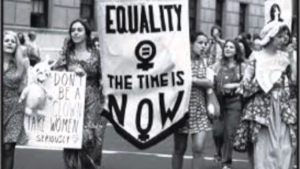 It can be asserted that the death of Abel foreshadows the killing of Christ. The crucifixion symbolized the death of God as an angry father, and the rebirth of God as something that resides in all of us in essence, an egalitarian figure that assists men and women in making choices of their own free will. In the home, the husband no longer represented the Godhead-instead, God resided now equally in both husband and wife. This is further displayed in the Christian sacrament of Holy Communion, where men and women equally ingest the body and blood of Christ, making it a part of them, rather than something that is separate and authoritarian.
 The business world today also reflects the egalitarian changes in society, later affirmed by the crucifixion of Christ. Many new business owners, unfamiliar with management techniques, initially behave as the God of the Old Testament-angry, bitter, and jealous. They fire people who do not do as they say, or who disagree with their opinions. In time, the business owners who succeed are the ones who quickly adjust their method of thinking. This change recognizes that employees are intelligent beings with free will. If employees do as one asks, it is because they choose to do so not because they are threatened if they do not. The need for a strict separation between the shepherd and the sheep is no longer relevant in essence, everyone in a company is part of the metaphorical farm. Some employees plant the seeds, while others water and others harvest. Some employees go on to invent better farming methods. It is essential that everyone is important in the process. The idea of an all-knowing, all-seeing Godhead is gone. Just as surely as we crucified Christ, a new dawn has risen.
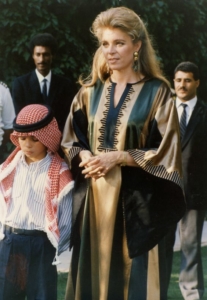 When Lisa Halaby married King Hussein of Jordan, she envisioned turning Jordan into a cradle of democracy. A bright-eyed idealist, she used pillow-talk to encourage her husband to launch democratic elections in the kingdom where he held absolute power. She fought hard to embolden women to run for parliament and put behind them her full support. In fact, she indicated, anyone with the desire to better their country could run for office. She encouraged minorities, the poor, anyone with an interest, to step up and make their case for bettering the Hashemite Kingdom. On election day, Lisa Halaby, now known as Queen Noor, waited anxiously for the results of the elections for which she had so dearly campaigned. When the results arrived, she could hardly believe her ears as the courtiers informed her that only approximately 1.5% of the population exercised their right to vote. The polling places remained largely empty throughout the day, with the Jordanian populous almost entirely disinterested in the historic elections occurring. Over the years, this Jordanian statistic has changed very little, to the great disappointment of leaders in Parliament.
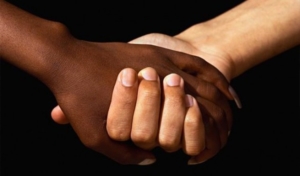 This way of thinking leads me to ask, has clan loyalty, and its long-term effect on our DNA, contributed to the racism we know of today? Is racism ingrained in our DNA? One can argue, that to a certain extent, it is. We exist today because of the impact clans had on us in the past, including the protections they offered, as well as marital and trade alliances they made. While we may live in a somewhat different world today, elements of this way of life still exist and raise their ugly head in what we now call racism. Put more simply, birds of a feather flock together. We seem inherently more comfortable around people who look like us, talk like us, and believe like us. Nothing is more telling than during the filming of “The Planet of the Apes,” the actors, all dressed in animal costumes, segregated one another according to the breed of animal they portrayed. The film’s producers noted this irony, and it has since been referenced in various anthropological studies. Behind closed doors, people with similar beliefs mock those with other beliefs, as do people with one skin color, sometimes mock those of other skin colors.
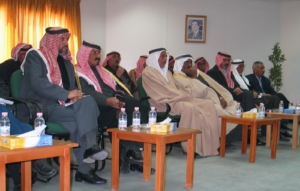 One solution for creating a more diverse society is “exposure.” In therapy, “exposure” is known as “therapy to treat anxiety disorders. Exposure therapy involves exposing the target patient to the anxiety source or its context without the intention to cause any danger. Doing so is thought to help them overcome their anxiety or distress.“
  Raised by a feminist woman of the 60’s, my mother always taught me that, under the law, men and women should be equal. However, she also indicated that inequalities still exist within our society, because of differences biologically between the sexes. The most significant inequality, she told me, exists in the form of economic servitude-that is, women who do not exercise their ability to earn an income and remain economically dependent upon their husbands. This dependency began, she explained, because of the extended length of time it takes to raise a child. Feminism acknowledges differences between the sexes and makes special considerations for them. As a result, our society has taken steps to remedy the social inequalities created by the fact that women give birth and remain the primary caretakers for our society’s children. Examples include insurance that covers childbirth, maternity leave and working hours that allow women to retrieve their children from school. Stay at home positions have also been created, allowing for further flexibility required for childcare. Feminism also acknowledges that, biologically, women have less physical strength than men. Women are more likely to be raped or taken a prisoner of war. Furthermore, a rape occurring during wartime can lead to women giving birth while captive, creating a plethora of additional problems. As a result, placing women on the front-line during a war arguably creates an uneven playing field, thus constituting an unwise situation. Obviously, women have vulnerabilities during wartime that men do not, because of biological differences between the sexes.
 The biological sex of men and women is a different concept than the gender roles adopted by them. Gender roles are defined as “a social role encompassing a range of behaviors and attitudes that are generally considered acceptable, appropriate, or desirable for people based on their actual or perceived sex.”
  The possibility exists that failing to acknowledge one’s biological sex can create an illusion of gender progressivism, while actually contributing to the further economic disenfranchisement of the female sex. For example, couples might simultaneously identify with the gender role opposite to their biology but still fall back into the traditional gender roles concurrent with their biology. In one arguably extreme scenario, the female sex, identifying publicly with the male gender role, gives birth and stays home with the baby, while the male sex, identifying publicly with the female gender role, economically provides for the female sex, and works outside the home. It seems progressive, with a person at home identifying with the male gender role, while the person at work identifies with the female gender role. In reality, however, the fact remains that the female sex is still economically powerless, and indentured to the male sex. Nothing has actually changed, save for the couple’s perceptions of themselves. While the perception of change exists, no meaningful social change has actually occurred. More dramatically, the lack of social change is actually hidden behind a social mirage of progressivism.
 The explosion of the Space Shuttle Challenger followed three previously aborted flight attempts. As a young elementary school student in 1986, we lined up our chairs for the fourth time to watch the Challenger launch. Our teachers, the news, and the entire country had us excited to observe a lesson taught from outer space. NASA, under pressure for the launch to occur, overlooked icicles on the landing pad. This led to the “major malfunction” that caused the Space Shuttle Challenger to explode after takeoff, killing all seven crew members. The explosion left school children bewildered and the nation shocked. A subsequent investigation led to the conclusion that the mission should have, once again, been aborted.
 Can abortion, in cases of rape and/or incest, represent a sensible decision? Ted Bundy, the world’s most notorious serial killer, entered this world likely as the product of just such a scenario. Initially raised as his mother’s brother, he only discovered his true parentage later in life. Shocked by this betrayal, coupled with a devastating breakup, he embarked on a devastating trail of rape and murder. After wreaking havoc on young women across the country, Ted Bundy finally met his end in the electric chair. However, it can be asserted that, had abortion been legal at the time of his conception, many women and their families would have been spared a great deal of torment and pain. What is more moral-society ending a life before it’s birth, or far after, when the person is an adult? Does Ted Bundy represent an example of abortion representing a sensible decision?
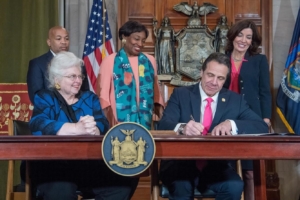 Our legal system is attempting to clarify this difficult situation. New York recently passed “the Reproductive Health Act, (in which) non-doctors are now allowed to conduct abortions and the procedure could be done until the mother’s due date if the woman’s health is endangered or if the fetus is not viable. The previous law only allowed abortions after 24 weeks of pregnancy if a woman’s life was at risk.”
  It can be argued, that for the American populous truly to be healthy, genetic health must be incorporated into the already existing health paradigm of exercise, healthy eating, and mental health awareness. In order for us to reach successfully the next level in our overall health, we must all be aware of our genomes, and what they specifically contain. By doing so, we can then not only be aware of our ethnicities, but also have an awareness of our genetic predispositions, sensitivities, mutations, and polymorphisms. One can argue that without the integration of genetic health into our public consciousness, many preventable, curable, and/or treatable conditions will be misdiagnosed, mistreated or overlooked.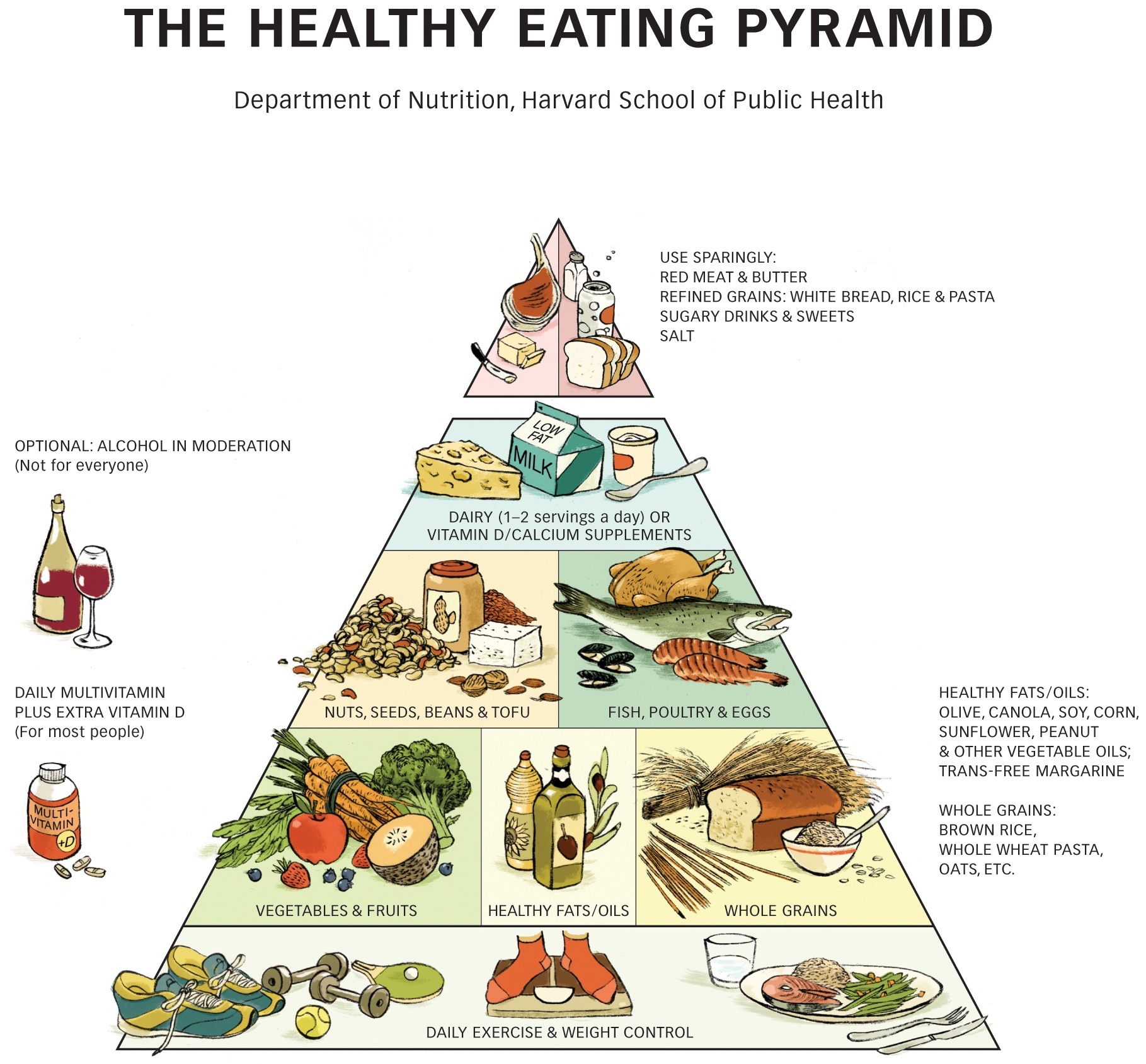
 The reality is, however, that many of these young women are runaways, with no authority figure other than a violent pimp. Their lives consist of humiliation and sexual objectification, often spiraling into a deadly cycle of violence and drug abuse. This cycle is often only ended by the murder or drug overdose of the prostitute. Like the state of nature itself, their lives are nasty, brutish, and short.
 Like our current society, the business culture has evolved also, into one of custodial and transformational leadership, rather than one of dictatorship. As the CEO of a digital marketing company, I feel a responsibility toward my staff, to make their lives better, more hopeful, and more productive. I am not just their boss in many ways I consider myself a parent, not only here to make sure the company prospers, but that their personal lives prosper also. My office has food for the staff, web seminars for continued learning, lights dimmed to protect their eyes and paid vacation for those on salary. I am constantly thinking of new ways to improve their lives because the welfare of the individuals within my company has become just as important as the welfare of the company itself. This is quite different than just a few years ago, where the bottom line mattered the most, even at the expense of the staff’s private lives and paychecks.
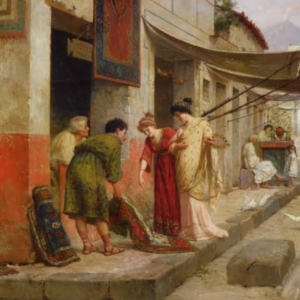 However, the rise of commerce led to to the rise of monopolies, arguably damaging consumers with high prices created by the lack of competition. This resulted in Antitrust laws. “United States Antitrust law is a collection of federal and state government laws that regulate the conduct and organization of business corporations, generally to promote fair competition for the benefit of consumers. The main statutes are the Sherman Act of 1890, the Clayton Act of 1914, and the Federal Trade Commission Act of 1914. These Acts, first, restrict the formation of cartels and prohibit other collusive practices regarded as being in restraint of trade. Secondly, they restrict the mergers and acquisitions of organizations that could substantially lessen competition. Thirdly, they prohibit the creation of a monopoly and the abuse of monopoly power.”
 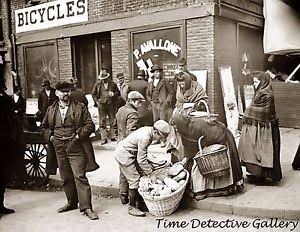 As an average citizen and business owner in the United States, the partial shutdown of the Federal Government has not noticeably changed my life or my business at all. I remember in the past, during partial government shutdowns, hearing that the police would no longer be funded. I suppose one could be afraid of such a prospect, and yet, I could not help but feel that we govern ourselves pretty well. Furthermore, in the American South, we all have guns, with the police essentially there to take reports after the fact. Additionally, as an advocate of Laissez-Faire economics, I tend to question the value of the Antitrust laws, that led to the bloated monster we now call the Federal Government. The “invisible hand” of the economy would likely take hold, and the matter of monopolies and unfair competition would sort themselves out, according to the laws of efficiency, supply, and demand. Again, it is hard to believe that, with the shutdown of the Federal Government, anything would really change in our day to day lives.
 People have always had a fascination with fairy tales. To this day, they are still being reimagined in the general public’s imagination. The likes of Cinderella, Snow White, and Sleeping Beauty continue to inspire young women throughout the generations. Young girls, from a very early age, are read these stories about damsels in distress, and the prince that saves them from a long slumber with true love’s kiss. These girls also learn about the ensuing beautiful wedding, followed immediately by “happily ever after.” This then begs the question-are these fairy tales realistic, or do they create unhealthy stereotypes and expectations for our daughters? In essence, is encouraging our daughters to believe they need to be saved by a knight in shining armor a storyline that needs to be buried and forgotten?
 Princess Diana’s marriage to Prince Charles promised us a traditional fairy tale, but failed to deliver. As it turned out, our damsel in distress evolved into her own woman, who instead of conforming to a traditional role, chose instead to reinvent herself. This decision inspired countless women, including me, this decision inspired countless women, including me, to look up to her up and follow suit. Instead of waiting for prince charming, many women emulated Diana’s sense of independence coupled with good deeds. For example, many of these women spent their time volunteering in soup kitchens and churches. A poignant moment occurred when Diana stated, “People think that at the end of the day, a man is the only answer. Actually, a fulfilling job is better for me.” The fairy tale had not ended but instead been reimagined, as a beautiful princess, bravely facing the world alone.
 As a woman of the Princess Diana generation, I consider myself lucky to have learned how to reimagine the fairy tale for myself. Quite simply, this could not have been done without the fairy tales of my youth, coupled with the reality of Princess Diana’s life. For me and my generation, throwing out the fairy tales, and branding them unseemly, would have arguably negatively impacted our lives. Perhaps the fusion of fairy tales and feminism, that has so defined my generation, will serve as an example for future ones to come.
 As the years went by, Eileen continued to hope that her Republican Party would change. She advocated for the removal of abortion from the party platform, considering it contrary to the Republican core values of individual rights and liberties. Eileen states, “How much more in your life can the government get? Abortion should be a personal decision-not one made by a white, male congressman.” (1) She also experienced the decimation of Title IX women’s insurance, including the removal of birth control as a covered benefit. Furthermore, Eileen and her fellow female constituents failed to receive support from the male-dominated Republican Party on most bills regarding environmental issues. As a result, she witnessed most environmental bills fail to pass, signaling an even greater divide between the two genders. The undertone surrounding these debates revealed a very dark, insidious, anti-woman rhetoric. These events left Eileen feeling utterly alone in the Republican Party, advocating for women’s rights and causes about which women generally felt strongly, but men generally did not.
 For Eileen, the Kavanaugh hearings represented the straw that broke the camel’s back. Eileen states, “I do not surmise that she (Christine Blasey Ford) was right or wrong, but …I know the Brett Kavanaugh’s of the world. I’ve met hundreds of them in my career. He is the ultimate party boy and probably did not think what he did was abusive or wrong. My point is, the treatment of her was so atrocious… She was a credible witness, not somebody looking for a job or to make money. Her family suffered. She had to flee her home. She suffered death threats. And Brett Kavanaugh? He was appointed to a lifetime position … to a position that is going to affect women for their whole lives… she suffered immensely.” (1) After the last day of the hearings, Eileen Padberg called and changed her voter’s registration from Republican to nonpartisan. She simply could not support a party that no longer supported her or her fellow women and treated them with such disrespect. Eileen Padberg, a woman with a stellar reputation in her party, a woman who supported her party against all odds, and a woman who tried repeatedly to assist her party in evolving and attracting more women, finally left it. She states, “people who found out were incredulous, but I could not take it.” (1)
 In the aftermath of Eileen’s resignation from the Republican Party, she has moved on to nonpartisan politics-specifically in the areas that will help her fellow women. Last weekend she helped organize and participate in a fundraiser for a women’s shelter called WISEPlace, which stands for “Women Inspired, Supportive, and Empowered.” This shelter assists unaccompanied, homeless women, and has provided such assistance for the past thirty-one years. The capital campaign, of which Eileen co-chaired, raised a quarter of a million dollars. Now that, Eileen, is something that WILL make a difference.